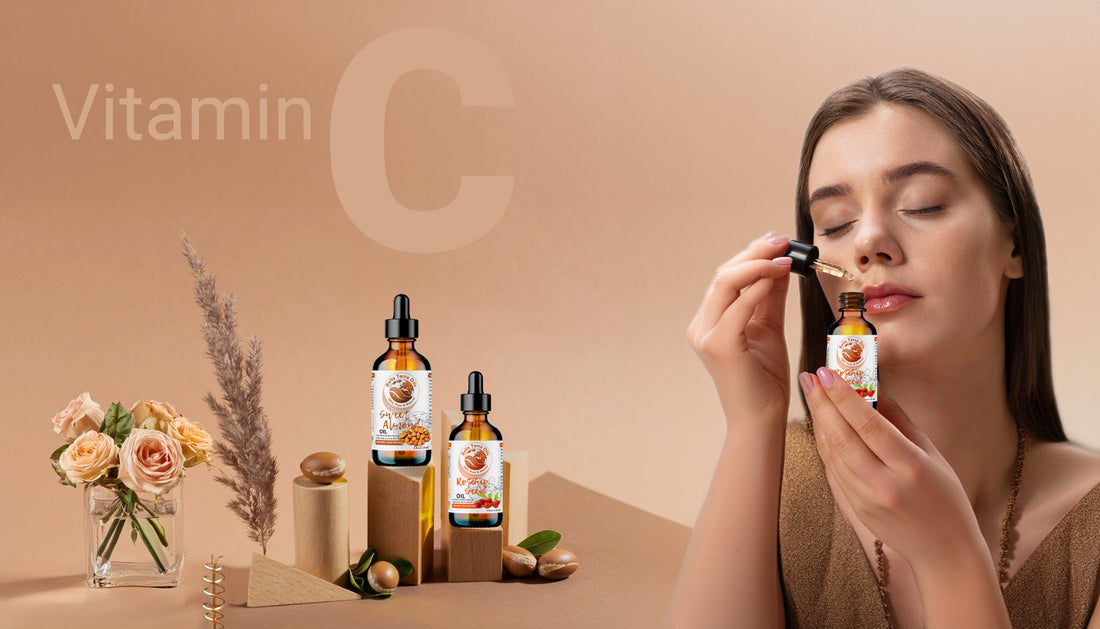
If you are searching for carrier oils high in vitamin C, start with an important label check: a fruit's vitamin C content does not establish the vitamin C content of an oil made from that plant. An oil, a fruit extract and a finished serum are different ingredients or products.
Is vitamin C naturally abundant in carrier oils?
Vitamin C, or ascorbic acid, is water soluble, as explained by the NIH Office of Dietary Supplements. Carrier oils are primarily lipids. A botanical name or a bright orange color is not evidence that a bottle provides a meaningful amount of ascorbic acid.
Rosehips and sea buckthorn fruit are often discussed as vitamin C sources. That does not justify describing their seed oils as “rich in vitamin C” without composition evidence for the specific oil. Likewise, a camu camu or Kakadu plum extract should not be treated as interchangeable with an extracted seed oil.
What about oil-soluble vitamin C?
Some formulated cosmetics use derivatives of ascorbic acid that have different solubility from ascorbic acid itself. Examples include ascorbyl palmitate and tetrahexyldecyl ascorbate. The Cosmetic Ingredient Review's published assessment of ascorbic-acid ethers and esters describes these separate ingredients.
A facial oil formulated with an added derivative is different from a single-ingredient carrier oil. Do not assume that either product has the same composition, concentration or performance as another vitamin C product. Read the full ingredient list and the maker's directions.
How to choose for your actual goal
- For an oil's skin feel: compare texture, finish and intended cosmetic use. You do not need a vitamin C claim to choose an oil you enjoy.
- For a vitamin C formula: look for the named vitamin C ingredient and product-specific information. A fruit picture or the word “glow” does not identify its form or amount.
- For a composition claim: ask the supplier what evidence supports it for that ingredient or finished product. Do not transfer nutrient figures for a whole fruit to its seed oil.
Can you mix vitamin C powder into an oil?
Water-soluble ascorbic acid should not be assumed to dissolve evenly in a carrier oil. Stirring powder into oil is not a verified formula with known distribution, stability or suitability for skin. Choose a finished product with directions rather than using this article as a formulation recipe.
Adding a carrier oil to a routine
Follow each product's label and introduce new products one at a time. The American Academy of Dermatology recommends testing a new skin-care product on a small area before wider use. Stop using it if irritation develops.
Our carrier oil guide helps compare oils by cosmetic use and texture. You can also review the current ingredient and size information for Rosehip Seed Oil. This is a cosmetic shopping option, not a claim that the oil is a vitamin C serum or treats a skin condition.